The teacher and the students come into the classroom in time. First, the students enter to the classroom and then the teacher goes in. The classroom has big doors and big windows, it is tidy and clean (or as most as it can possibly be). I didn't feel any strange smell when I was there. There's plenty of natural light in there and there are not any peripherals on the wall.
The teacher and the children sing a song to begin the class. The teacher starts the lesson with that song, then she asks what's the weather like and then comes an activity (but previously she cleans the chalkboard). Some students may not know that the lesson has started because they're not paying attention so the teacher has to yell a little bit to call for they attention.
The lesson starts with the teacher recalling for what they've done on the previous class and she gives them another activity, it's mostly an activity from the coursebook. She gives them some time to do the activity and then they correct it all together. She sets times for each activity. In some activities the teacher calls some students to complete the activity written in the chalkboard so everyone can see which are the correct answers to the activities. In the class, the student work with 3 or 4 activities and if by the end of the class there's not enought time to complete the last one, they have to bring the activity done for next class as homework. The lesson ends and some students and some students are tired and some are eager to leave or chatting with their classmates.
lunes, 26 de septiembre de 2016

lunes, 5 de septiembre de 2016
What can we use to teach at primary school
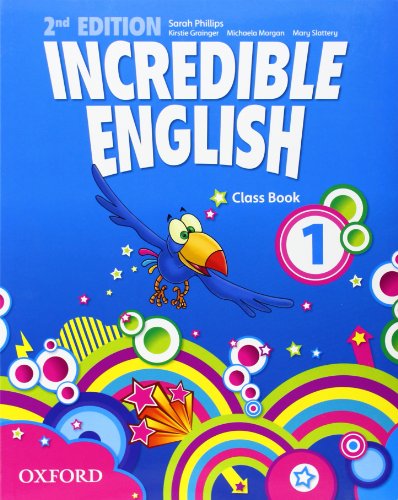 Coursebook: Incredible English 1.

Unit 1: Hello, Mr Fixy!
Context and topics: Contextos de la vida cotidiana y escolar/Mi escuela y Mi familia.
I chose this unit with this context, because the activities are questions personal that also serve you for life in school and in everyday life.
Unit 2: The school show.
Context and topics: Contextos de la vida cotidiana y escolar/Mi familia y Mi hogar.
I chose this unit with this context, because the guys learn the family members through questions such as who is this, also through images of people learn to ask who they are. kids also can provide information about the members of the family.
Unit 3: The Pic Nic.
Context and topics: Contextos de la vida cotidiana y escolar/Mi familia y Mis amigos.
I chose this unit with this context, because the boys learn to describe belongings through food and drinks, also learn how to use the appropriate language with his friends request, thanks and apologies.
Unit 4: The toy cupboard.
Context and topics: Contextos de contenidos escolares/El espacio.
I chose this unit with this context, because the boys learn to give information about the location of toys in a space such as the House, also learn specific the questions as for example where is my, it is here.
Unit 5: Puppets.
Context and topics: Contextos de contenidos escolares/Las actividades humanas.
I chose this unit with this context, because the boys learn to name and describe the parts of the body through puppets and with questions as it is got red hair, it is got long hair.
Unit 6: At the farm.
Context and topics: Contextos de contenidos escolares/Los seres vivos.
I chose this unit with this context, because the boys learn to talk about likes and dislikes through animals and with questions as i like / i don´t like / do you like.
Unit 7: At the park.
Context and topics: Contextos de contenidos escolares/Los seres vivos.
I chose this unit with this context, because the boys learn to talk about outdoor activities with actions of them and animals. for example i can/i can´t / actions (run, jump).
Unit 8: Clothes.
Context and topics: Contextos de contenidos escolares/Las actividades humanas.
I chose this unit with this context, because the boys learn to describe clothing used with items like t-shirts, jeans and with questions such as for example i´m wearing.
Unit 9: House and home.
Context and topics: Contextos de contenidos escolares/La organización social.
I chose this unit with this context, because the guys learn geographic coordinates and the places of the town, through questions such as for example where´s/where is it in map 1. images are also used with maps of a town with different parts of the town as such house/park/cinema; etc.
 Coursebook: Incredible English 2
Grade: 4th
Unit 1 - New friends
Context and topic: Contextos de la vida cotidiana y escolar - Mis amigos/Mi escuela
I match this unit with this context and topics because it is about friends. The unit teaches to the children how to name and describe their friends.
Unit 2 - The treehouse
Context and topics: Contextos de la vida cotidiana y escolar- Mi día a día. Contextos de contenidos escolares- Actividades humanas
I match this unit with this two contexts and topics because it describes activities done by children like for example naming different objects in the treehouse in a regular day.
Unit 3 - Come and play
Context and topics: Contexto de la vida cotidiana y escolar - Yo/Mis amigos/Mi día a día
I match this unit with this context and topic because it describes a day playing outside with friends.
Unit 4 - At the wildlife park
Context and topics: Contextos de contenidos escolares - Los seres vivos
I match this unit with this context and topic because it describes a day in a wildlife park observing different kinds of animals.
Unit 5 - At the shop
Context and topics: Contextos de contenidos escolares - Las actividades humanas
I match this unit with this context and topics because it describes a day in a shop. Children are buying things and learning about how a bunisess works.
Unit 6 - Lunchtime
Context and topics: Contextos de la vida cotidiana y escolar - Yo/Mi día a día/Mis amigos
I match this unit with this context and topics because it describes a tipical lunch with friends. It teaches the children about different types of foods.
Unit 7 - At the fair
Context and topics: Contextos de la vida cotidiana y escolar - Mi día a día
I match this unit with this context and topic because it describes a day in the fair for the children. They learn about different games and how things work there.
Unit 8 - At home
Context and topics: Contextos de la vida cotidiana y escolar - Yo/Mi familia y hogar/Mi día a día
I match this unit with this context and topics because it talks about houses. Children learn different things about their homes and how to describe different places there.
Unit 9 - At the pool
Context and topics: Contextos de la vida cotidiana y escolar - Yo/Mi día a día/Mis amigos
I match this unit with this context and topics because it talks about a regular summer day in the pool with friends.
 Coursebook: Incredible English 3
Grade: 5
Unit 1 - Hello, kids!
Context and topic: Contextos de la vida cotidiana y escolar / Mi dia a dia
I match this unit with this context because the activities given on it helps the child to know how to do common tasks everyday like Tell the time, Ask for objects and food and how to introduce themselves.
Unit 2 - Saturday morning
Context and topic: Contextos de contenidos escolares / Las actividades humanas
This unit shows activities of writing and description of some objects which are used in sports and manual tasks and also teaches the human feelings, clothes and colours.
Unit 3 - Camping
Context and topic: Contextos de contenidos escolares / Yo
In this unit children learn how to write about themselves, describe the things they have, their abilities and what they like to do.
Unit 4 - Looking at animals
Context and topic: Contextos de contenidos escolares / Los seres vivos
In this unit The animals are the protagonist. The Students has to classify animals into different categories, listen to speeches in order to paint a draw with the right colour and also they learn the characteristics of some animals like Insects, etc
Unit 5 - At the supermarket
Context and topic: Contextos de contenidos escolares / Mi dia a dia
I chose this context to match with this unit because the children learn about the price of things at a supermarket and also about food.
Unit 6 - Our town
Context and topic: Contextos de la vida cotidiana y escolar / Mi ciudad
In this unit the students learn to say the position of important places in a town and describe objects in images.
Unit 7 - At the sports centre
Context and topic: Contextos de contenidos escolares / Las actividades humanas
This unit presents a list of sports that are practised at a sport centre, the students has to read and understand the information given in order to answer some questions, also they learn more basics maths.
Unit 8 - Uncle Bill
Context and topic: Contextos de la vida cotidiana y escolar / Mis amigos
This unit shows a couple of activities to read, write and listen about our friends, where they are from, what they like to do, etc.
Unit 9 - The circus
Context and topic: Contextos de contenidos escolares / Las actividades humanas
In this unit the focus is on things that acrobats and clowns do at a circus, so in the activities the child has to match pictures with actions like a Cartwheel, a somersault, etc. Write the parts of the body and recognise information in posters.
 Coursebook: Incredible English 4
Grade: 6th
Unit 1 - Playing outdoors
Context and topic: Contextos de la vida cotidiana / Mi día a día / Actividades humanas / Los cambios de la naturaleza
I match this unit with those contexts because the activities given are all related to doing sports and different activities outside; such as football, go camping, tennis, surfing, and more. Also, as the unit refers to everything related to being outdoors, it is included the various kinds of weather too (rainy, sunny, cloudy, etc.)
Unit 2- Art
Context and topic: Actividades humanas / Mi pais / yo
I match this unit with those contexts because the unit is all about different types of art (paintings, music, sculptures, etc.) and the differences from one country to another. It also has vocabulary to express the child´s own abilities (I can sing/ I know how to play the piano)
Unit 3 - Health
Context and topic: Yo / Mi día a día / Actividades humanas
I match this unit with those contexts because it talks about what it takes to have a healthy life and as well as vocabulary about different pains one may have, such as headaches, getting sick, feeliong dizzy, etc. It also teach the students some methods to know whether you are healthy or not, and names healthy aliments (fruits and vegetables in general).
Unit 4 - On the farm
Context and topic: Los seres vivos/Actividades humanas/Mi país
I match this unit with those contexts because, as the unit is all farm related, there is planty of vocabulary regarding animals (farm animals, such as cows, horses, chickens, etc,), plants (vegetables such as potatoes, carrots, letucce, pumpkins) and people (the farmer, for example), and what kind of products does farms provide. I included "Mi pais" because teachers can ask about the diferent type of crops in the farms all over the country.
Unit 5 - Animal life
Context and topic: Los seres vivos/Mi país
I match this unit with those contexts because in this unit students will learn about different types of animals that come from different places and have special characteristics (Lions, jiraffes, rhynos, zebras, crocodiles), and even maybe from their own country.
Unit 6 - Safety
Context and topic: Mi día a día/ Mi barrio/La organización social
I match this unit with those contexts because it focuses on the rules that people must follow within a society (respect the traffic lights, use helmet if you are riding a motorbike, know what the traffic sings mean, etc.) All that knowledge will be very usefull for the students who will be constantly dealing with rules outside their houses. Also, it says what to do and not to do in order to be a better cityzen.
Unit 7 - At school
Context and topic: Mi escuela / Yo
I match this unit with those contexts because this unit is all about school vocabulary (chalk, classroom, teacher, backpack, pencil, etc.) , their subjects (Maths, Art, History, etc.), their pros and cons, how to express the students preferences in one subject or their lacks in another, and whether the students have a favourite one or not.
Unit 8 - Underwater life
Context and topic: Los seres vivos / Mi país
I match this unit with those contexts because it is focused on the animals which live underwater (Sharks, octopuses, fish, whales, etc.) Teachers can specify which of all the underwater fauna are the most commo in the countrym and in which part are located as well. In the unit it will also say parts of the landscape, such as rivers, lakes, mountains, the sea and the coast.
Unit 9 - Technology
Context and topic: Mi día a día / Mi familia y mi hogar
I match this unit with those contexts because the vocabulary given in the unit is well known by children nowadays. For example, Tvs are very common in every children´s house, as well as computers, cellphones, cameras, and more. Students will easily relate with the subject, as they practically are surrounded by technology, in their house, at school, and everywhere.
There is no information of what resources the teachers are using in 1st and 2nd because they write their own activities.
Authors: Juan Cruz Villegas, Emilio Delvilano, Angel Berretta, Nicolas Latanzi
lunes, 11 de julio de 2016
What Do EFL Teachers Teach?
On day 1 I could see that all teachers from EP 68 get together at the beginning of the year and decide the yearly content, including the books they are going to use. They have it written but the teachers usually work with a daily lesson plan. They follow a book and most part of the class is based on that book. Most students don't buy the book, they have photocopies.
I could see a couple of activites like for example: In the book they had images of a bike, a scooter and a motorbike. The teacher read the description of some objects without saying which one was she refering to and the kids had to guess which object was she talking about. Usually the teacher gives them one activity to work that day and another one that the kids have to do as homework for next class. All those activities are activities from the book.
On day 2 I could see that the teacher bought the book. She asks for both book and activity book. Books offer digital content but the teacher does not use that digital content with the kids. It matches with the content prescribed in the CD. Maybe the book doesn't include all the content prescribed but it includes many important things for the children to learn. The title of the book was "Incredible English 2", the date of print is 2011 and the publisher is "Oxford University Press".
I would have chosen the book because i think it's a good book. Maybe there are better books, I really don't know. But as far as I know, I think it is a complete book that children understand quite good and it includes many useful contents. On this day I could see that, as same as happened on day 1, basically all the class is based on the books. In one of the activities, children had to count how many spoons of sugar contained a meal named on the book. The book gave the information about 10 different meals and how many spoons of sugar do those meals contain. Later, the teacher said, for example: "I've got an orange juice and a cake. How many spoons of sugar do we have?" and children had to answer to those questions. In conclusion, on both days, I could see that classes are all based on the book or coursebook given.
I could see a couple of activites like for example: In the book they had images of a bike, a scooter and a motorbike. The teacher read the description of some objects without saying which one was she refering to and the kids had to guess which object was she talking about. Usually the teacher gives them one activity to work that day and another one that the kids have to do as homework for next class. All those activities are activities from the book.
 |
| The book used in the classes |
On day 2 I could see that the teacher bought the book. She asks for both book and activity book. Books offer digital content but the teacher does not use that digital content with the kids. It matches with the content prescribed in the CD. Maybe the book doesn't include all the content prescribed but it includes many important things for the children to learn. The title of the book was "Incredible English 2", the date of print is 2011 and the publisher is "Oxford University Press".
I would have chosen the book because i think it's a good book. Maybe there are better books, I really don't know. But as far as I know, I think it is a complete book that children understand quite good and it includes many useful contents. On this day I could see that, as same as happened on day 1, basically all the class is based on the books. In one of the activities, children had to count how many spoons of sugar contained a meal named on the book. The book gave the information about 10 different meals and how many spoons of sugar do those meals contain. Later, the teacher said, for example: "I've got an orange juice and a cake. How many spoons of sugar do we have?" and children had to answer to those questions. In conclusion, on both days, I could see that classes are all based on the book or coursebook given.
martes, 14 de junio de 2016
The Daily Lesson Plan
Introduction
I observed two classes at a primary school last week (4th and 6th grade) in order to watch and understand how does a class work and how the teacher prepares the class. We were told to ask for the "libro de temas" but unfortunately the teacher told us that they don't have any. According to them, there's a "libro de temas" only in secondary school. The teacher had a "daily lesson plan" in which she wrote all the activities that she wanted to do in the classroom that day.
At the beginning of the day, the kids entered first to the classroom and sat. A couple of minutes later, the teacher came in. First, the children and the teacher sang a song to say hello. After that, she asked how was the weather like and she wrote that down on the blackboard next to the date. The class started with the teacher correcting the homework of the previous week. Then she gave a new activity to the kids. They had to look at the pictures of things and places in their classbook (Incredible English was the name of the book) and write questions about that topic looking to the models given. This is an example:
Is a robot on the tale?
Yes, it is.
Once the activity was given to the children, they started doing it. Meanwhile the teacher helped them if they had any doubt and after they all finished they started correcting the activity on the blackboard. At the end of the class, the teacher gave them another activity that they had to do as homework for the next class.
Comparing The Daily Lesson with the "libro de temas" and the curricular design
I can't compare now what the teacher taught with the "libro de temas" because there's not one of those. But, what she did have was a daily lesson plan and comparing what she taught with that I can say that she did everything that was written in the daily lesson plan that she had previously prepared.
The curricular design specifies that there are 4 essential contents: Context, tasks, linguistic exponents and language practices. The teacher used activities relating all those 4 essential contents. She used context because the activity was talking about objects that they can find in their houses. She also used Tasks because she gave a sequence of activities to the kids. Linguistic exponents was another content included because the teacher taught them grammar and vocabulary through the activities early mentioned. And finally she also used language practices for example by using a song to say hello at the beginning of the class. Given all this information, I could say that the teacher used all the 4 essential contents, of course that it could have been better, or maybe worst, but in my opinion she prepared well her class based on the curricular design and using a daily lesson plan.
Clarification: I attended to two different classes but I've chose to make this post about the 4th grade lesson because both were similar but the 4th grade lesson was more complete and I think it was a better example for this post.
I observed two classes at a primary school last week (4th and 6th grade) in order to watch and understand how does a class work and how the teacher prepares the class. We were told to ask for the "libro de temas" but unfortunately the teacher told us that they don't have any. According to them, there's a "libro de temas" only in secondary school. The teacher had a "daily lesson plan" in which she wrote all the activities that she wanted to do in the classroom that day.
 |
| A very complete example of a Daily Lesson Plan |
The Class
Is a robot on the tale?
Yes, it is.
Once the activity was given to the children, they started doing it. Meanwhile the teacher helped them if they had any doubt and after they all finished they started correcting the activity on the blackboard. At the end of the class, the teacher gave them another activity that they had to do as homework for the next class.
Comparing The Daily Lesson with the "libro de temas" and the curricular design
I can't compare now what the teacher taught with the "libro de temas" because there's not one of those. But, what she did have was a daily lesson plan and comparing what she taught with that I can say that she did everything that was written in the daily lesson plan that she had previously prepared.
The curricular design specifies that there are 4 essential contents: Context, tasks, linguistic exponents and language practices. The teacher used activities relating all those 4 essential contents. She used context because the activity was talking about objects that they can find in their houses. She also used Tasks because she gave a sequence of activities to the kids. Linguistic exponents was another content included because the teacher taught them grammar and vocabulary through the activities early mentioned. And finally she also used language practices for example by using a song to say hello at the beginning of the class. Given all this information, I could say that the teacher used all the 4 essential contents, of course that it could have been better, or maybe worst, but in my opinion she prepared well her class based on the curricular design and using a daily lesson plan.
Clarification: I attended to two different classes but I've chose to make this post about the 4th grade lesson because both were similar but the 4th grade lesson was more complete and I think it was a better example for this post.
lunes, 30 de mayo de 2016
School Culture at EP 68
My Experience in EP 68
The school culture refers to the way that things are done in a school and in this case, I went to EP 68 to observe and get into the school culture of that particular school. I could see how the context was. In EP 68, at the beginning of the day, the kids stand in line outside the classroom and say hello. First the students enter to the classroom and later the teacher gets in. The class starts with the students and the teacher singing a song in English. Then, the teacher asks about the weather and write it in the blackboard so the kids can practice their English talking about the weather. Once this has been done, they start with the activities.

In the class I attended to, the teacher did an activity with house's places and with common things that the children can find in their houses. The teacher lets the kids do the activity alone and later they all correct it. Also, the teacher makes drawings next to each sentence so the activity can be easier for the kids. The teacher helps the children with the words they don't know and with its pronunciation. Meanwhile the teacher corrects the activity from the children's notebooks and so the parents can know that the teacher has seen the activities. The children go in front of the class and complete the activities in the blackboard. After that, the teacher gives another activity to the kids, using a classbook. If there's any time left, they do the activity at the moment, otherwise the children have to do the activity in their houses as homework and they check it with the teacher next class. In this particular class I could notice that the program they were using was a mixture between a FLEX program and a FLES one because the children explore and experience English learning from songs and drawings but also they develop listening and speaking skills as well as some proficiency in reading and writing the foreign language.
The school culture refers to the way that things are done in a school and in this case, I went to EP 68 to observe and get into the school culture of that particular school. I could see how the context was. In EP 68, at the beginning of the day, the kids stand in line outside the classroom and say hello. First the students enter to the classroom and later the teacher gets in. The class starts with the students and the teacher singing a song in English. Then, the teacher asks about the weather and write it in the blackboard so the kids can practice their English talking about the weather. Once this has been done, they start with the activities.

Primary School Nº68
In the class I attended to, the teacher did an activity with house's places and with common things that the children can find in their houses. The teacher lets the kids do the activity alone and later they all correct it. Also, the teacher makes drawings next to each sentence so the activity can be easier for the kids. The teacher helps the children with the words they don't know and with its pronunciation. Meanwhile the teacher corrects the activity from the children's notebooks and so the parents can know that the teacher has seen the activities. The children go in front of the class and complete the activities in the blackboard. After that, the teacher gives another activity to the kids, using a classbook. If there's any time left, they do the activity at the moment, otherwise the children have to do the activity in their houses as homework and they check it with the teacher next class. In this particular class I could notice that the program they were using was a mixture between a FLEX program and a FLES one because the children explore and experience English learning from songs and drawings but also they develop listening and speaking skills as well as some proficiency in reading and writing the foreign language.
lunes, 9 de mayo de 2016
Best Program for Teaching English to Young Learners
Immersion programs in state-run schools
I would like to see immersion programs in state-run schools because those kind of programs use the second language as the medium of instruction, at least for part of the school day. In immersion programs, English is not only a school subject like any other, it is the language of instruction for at least some courses. Another good thing is that in those programs students retain their native language and literacy in the native language is never abandoned or discarded
How kids would learn
Kids would learn depending on what kind of immersion program they have in their school. For example, an interesting immersion program would be the partial one. In that case, kids would take half of their subjects in their own language and the other half in a foreign language. It could start that way and then gradually increase the number of subjects and the time in the foreign language in later grades. They would develop functional proficiency in another language without discarding their native language
Teachers Training
Teachers would be well-trained teachers with adequate proficiency in English so they can help their students to learn English properly. They would have appropriate training in teaching young learners, in teaching english, and in teaching through English. In immersion programs, teachers should be trained to teach correctly using the second language as good as using the native language. They would have a special training on how to teach to children considering the characteristics of young learners, how children learn and how children learn language.
Quantity of hours
The quantity of hours also would depend on what type of immersion program the school would decide to teach. For example an English immersion program could have at the beginning two hours a day, all week long. Then, it would gradually increase the hours of instruction
in english in later grades. It wouldn't be the same in every state-run schools but the main idea would be to use English as the language of instruction in at least half of the time of classes.
Resources
Immersion programs would have many resources or they should have them with government's help. Technology would be very useful to help kids to learn another language. Some of the resources would be:
The use of those materials would depend of the teacher because not every teacher would use them the exact same way. Nowadays most state-run schools don't use technology resources but those resources could be very useful and could really help students.
My experience
Unfortunately I've never been part of an immersion program. I think they're great and that all schools should use them. I remember that in my former school, we only had FLES programs and they weren't really good. They were too basic and classes were too infrequently so we didn't learn much. If you want to learn any language, you need to spend hours and hours learning, studying and hearing the language so you can get used to it and the use of immersion programs is a very good way to accomplish that.
I would like to see immersion programs in state-run schools because those kind of programs use the second language as the medium of instruction, at least for part of the school day. In immersion programs, English is not only a school subject like any other, it is the language of instruction for at least some courses. Another good thing is that in those programs students retain their native language and literacy in the native language is never abandoned or discarded
How kids would learn
Kids would learn depending on what kind of immersion program they have in their school. For example, an interesting immersion program would be the partial one. In that case, kids would take half of their subjects in their own language and the other half in a foreign language. It could start that way and then gradually increase the number of subjects and the time in the foreign language in later grades. They would develop functional proficiency in another language without discarding their native language
Teachers Training
Teachers would be well-trained teachers with adequate proficiency in English so they can help their students to learn English properly. They would have appropriate training in teaching young learners, in teaching english, and in teaching through English. In immersion programs, teachers should be trained to teach correctly using the second language as good as using the native language. They would have a special training on how to teach to children considering the characteristics of young learners, how children learn and how children learn language.
Quantity of hours
The quantity of hours also would depend on what type of immersion program the school would decide to teach. For example an English immersion program could have at the beginning two hours a day, all week long. Then, it would gradually increase the hours of instruction
in english in later grades. It wouldn't be the same in every state-run schools but the main idea would be to use English as the language of instruction in at least half of the time of classes.
Resources
Immersion programs would have many resources or they should have them with government's help. Technology would be very useful to help kids to learn another language. Some of the resources would be:
- Computers
- Interactive whiteboard
- Learning games
- Books or printed material for everyone
The use of those materials would depend of the teacher because not every teacher would use them the exact same way. Nowadays most state-run schools don't use technology resources but those resources could be very useful and could really help students.
My experience
Unfortunately I've never been part of an immersion program. I think they're great and that all schools should use them. I remember that in my former school, we only had FLES programs and they weren't really good. They were too basic and classes were too infrequently so we didn't learn much. If you want to learn any language, you need to spend hours and hours learning, studying and hearing the language so you can get used to it and the use of immersion programs is a very good way to accomplish that.
lunes, 2 de mayo de 2016
Pros and Cons of Teaching English to Young Learners
Advantages and disadvantages
Teaching english to young learners has a lot of advantages and there are a number of reasons for starting language learning early. These include:
- The value of increased time: One reason for starting English in the primary grades is the amount of time that children will have to learn the language. Some researchers believe that adolescents are more efficient language learners but younger learners simply have more time to learn the language
- The possibility of better pronunciation and fluency: Some researchers have concluded that young learners are more likely to attain native-like pronunciation, greater confidence in speaking the language and better oral proficiency
- The possibility of greater global awareness and intercultural competence: Children have the opportunity to become global citizens. Through learning another language, children can gain an appreciation for other languages and cultures. The experience can also make them more aware and reflective of their own language and culture
- The value of bilingualism, mental flexibility: Being bilingual provides many cognitive advantages. For young learners, especially, being able to speak another language provides a number of advantages such as mental flexibility, the ability to see a problem from different perspectives and it can also increase a child's self-awareness.
TEYL programs are very useful but if we want them to be effective, they have to be implemented correctly. Here we have some of the most common mistakes made that need to be considered in developing effective EYL programs:
- Scheduling language classes too infrequently or in sessions that are too short
- Treating foreign languages differently from other sujects, rather than as "valid academic subjects"
- Implementing a new program in all grades at the same time
- Failing to create program cohesion from primary to secondary grades
- Planning and scheduling foreign languages in isolation from the general curriculum
- Providing insufficient professional development for EYL teachers
- Supplying inadequate or inequitable resources, especially access to technology, with urban and private schools having greater access to both print and digital materials
My experience as a learner of English
When I was in both primary and secondary school I always had the same problem: I didn't have enough time to learn much because english classes were too infrequently. I had classes that mainly lasted 1 hour only, and were once or twice a week classes. That clearly isn't enough time to learn a language or at least is not the enough time to learn it properly. Also, some teachers taught me better than others. In my case, I've learned English mostly by myself. Reading texts in English, watching movies, listening to British music and doing other things that helped me to understand the language. I learned a lot from those things. School taught me the basic things of English, but when I wanted to know more, I had to learn on my own terms, alone, because I really like English and I wanted to keep learning. I think that If I hadn't learned English by myself I wouldn't have the knowledge required to be studying here, in the Teacher Training College.
TEYL programs in state-run schools
In my opinion, here in Argentina, state-run schools offer regular TEYL programs. I think that it happens because the best way to learn english as a child is by taking inmersion or bilingual programs and that kind of programs don't exist in state-run schools here. Here we only have Flex (foreign language exploratory or experience) programs which introduce children to different languages and cultures but in that kind of programs, children receive only short sessions. Also, we have FLES (foreign language in the elementary school) programs in which children study one language as a regular school subject for up to 45 minutes a day, several times a week. The goal of a FLES program is to help children develop listening and speaking skills in another language. Those programs work, of course, children can learn from them, but a really good learning requires a better way. For example here in the Teaching Training College, I think most part of students have learned english from a different place, they haven't learned English only in School. I think that state-run schools here should offer better TEYL programs but they also need help from the government for that. I believe that both teachers and government should work harder together and do all the things that are necessary to improve education.
Suscribirse a:
Entradas (Atom)